A delayed gratification spending companion engineered through rapid human-AI collaboration, wrapped in a native Capacitor shell with real-time Firebase synchronization.
The Concept
Fermata is a mobile application built on a single, powerful behavioral principle: pause before you buy. In an era of frictionless one-click purchasing and algorithmic impulse triggers, Fermata introduces a deliberate cooling-off period between desire and action — giving users the space to reflect, reconsider, and reclaim financial intentionality.
The name derives from musical notation — a fermata symbol (𝄐) instructs a performer to hold a note beyond its normal duration. In the context of spending, Fermata asks you to hold your purchase decision, letting the initial impulse fade so rational judgment can take over.
"The best purchase decision is the one you've had time to think about. Fermata doesn't block you — it gives you the gift of time."
Core Features
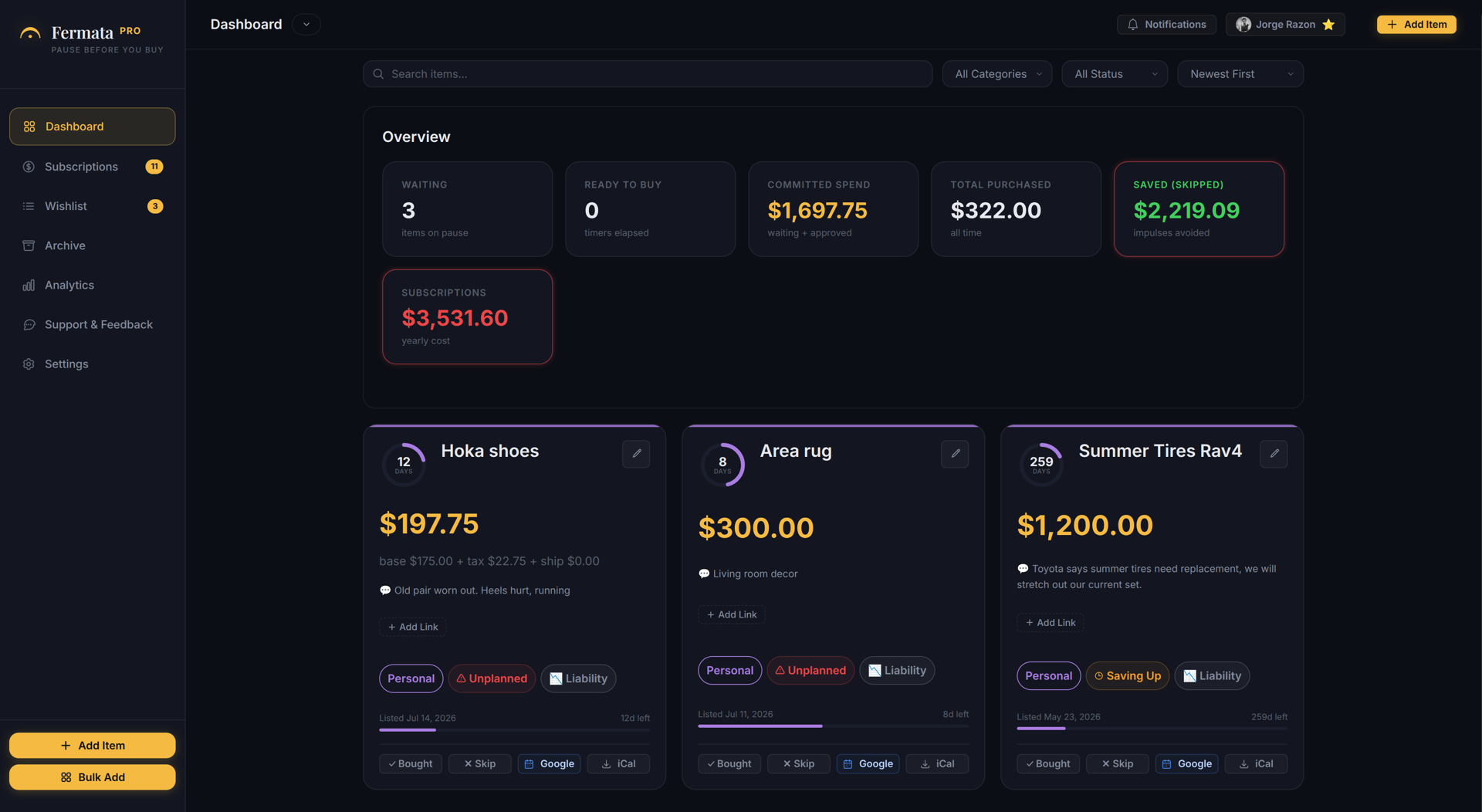
- Delayed Gratification Timer: Every item you want to buy enters a configurable waiting period. The app tracks your wants, counts down the hold time, and presents a clean dashboard of pending decisions — separating impulse from intention.
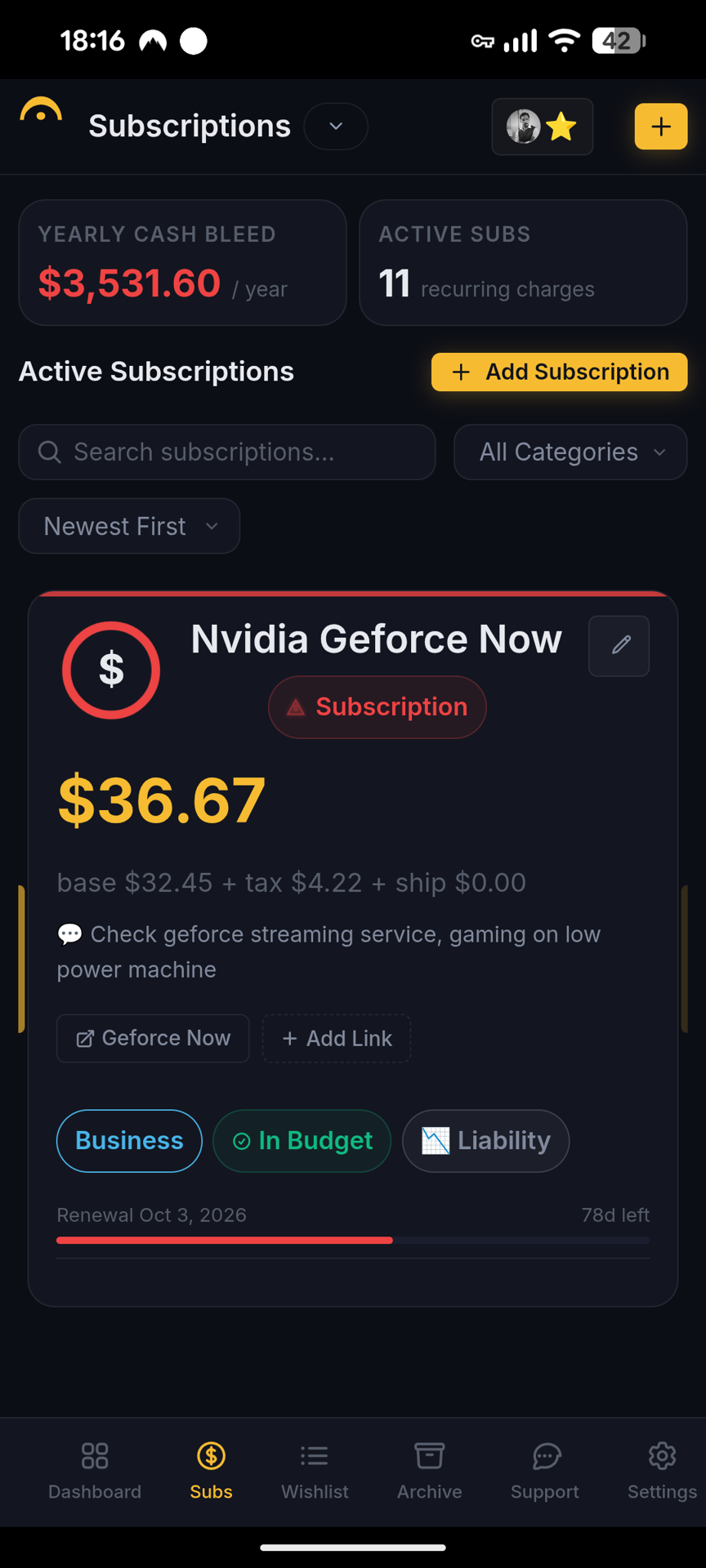
- Wishlist Dashboard: A beautifully organized view of all your pending purchases, complete with item details, countdown timers, and the ability to approve, dismiss, or extend the hold period on any item.
- Spending Reflection: After the hold period expires, Fermata prompts a quick reflection: Do you still want this? This simple question, backed by time, dramatically reduces regret purchases and builds healthier spending habits.
- Cross-Device Sync: Powered by Firebase Realtime Database, your wishlist and decisions sync seamlessly across all your devices. Start tracking on your phone, review on your tablet — your data is always current.
Technical Architecture
Fermata was engineered as a modern cross-platform mobile application using a carefully selected technology stack that balances native performance with rapid development velocity.
- Native Wrapper: Capacitor v6
- Backend & Sync: Firebase Realtime Database
- Frontend: Vanilla HTML5 / CSS3 / ES6+ JavaScript
- Platform Support: iOS & Android (via Capacitor native bridges)
- Version Control: Git — full commit history tracked on GitHub
- Development Model: Rapid human-AI collaborative engineering
Capacitor v6 Native Wrapper
The application leverages Capacitor v6 as its native bridge, providing access to device-level APIs while maintaining a web-based codebase. This approach delivers near-native performance with the flexibility of web technologies — enabling rapid iteration without sacrificing platform integration.
Capacitor's plugin ecosystem provides seamless access to native device features, ensuring Fermata feels like a first-class mobile application. Thanks to this robust architecture, the app is fully packageable as a native APK and App Bundle (AAB) for Android. It is currently in a closed beta testing phase with an active group of users, and is nearing its official deployment on the Google Play Store.
Firebase Realtime Sync
Firebase Realtime Database serves as the application's backend, providing instant synchronization of user data across devices. Every wishlist item, timer state, and decision is persisted in real-time, ensuring a consistent experience regardless of which device you're using.
The Firebase integration handles authentication, data persistence, and real-time listeners — eliminating the need for custom backend infrastructure while providing enterprise-grade reliability.
Rapid Human-AI Development
Fermata stands as a testament to the power of collaborative human-AI engineering. The entire application — from concept to functional prototype — was developed through an iterative dialogue between human direction and AI execution.
Development Pipeline:
🧠 Concept & Requirements → 🤖 AI-Assisted Architecture → ⚡ Rapid Prototyping → 🔧 Capacitor Integration → 🔥 Firebase Sync → 📱 Native Build
The development process followed a tight feedback loop: human-defined goals and design direction were translated into code by AI agents, reviewed and refined iteratively, and committed to version control at every meaningful milestone. This approach compressed what would typically be weeks of development into days of focused, high-velocity engineering.
Git-First Workflow
Every stage of Fermata's development was tracked through Git, with clean commit messages and organized branching. This approach provided full transparency into the iterative process internally — from initial scaffolding to final polish.
This Git-first approach ensures that every design decision, architectural change, and feature addition is documented, reversible, and auditable — a professional standard maintained even in rapid AI-assisted development cycles.
Behavioral Design Philosophy
At its core, Fermata is not just a tool — it's a behavioral intervention. The application is designed around principles from behavioral economics and cognitive psychology:
- Cooling-Off Periods: Research shows that introducing a delay between desire and action significantly reduces impulse purchases and increases decision satisfaction.
- Friction as Feature: Unlike modern commerce that removes all friction, Fermata intentionally adds a moment of pause — transforming friction from an enemy into a protective mechanism.
- Visual Accountability: The dashboard provides a clear, unemotional view of pending decisions, allowing users to see their spending patterns objectively.
- Positive Reinforcement: Successfully navigating the hold period and making intentional choices builds confidence and reinforces healthier financial habits over time.

🚀 How to get started
- • Android App: Download and install the beta directly here:
https://filedn.com/lHpDbWcnffvbDvF773OiH6L/fermata/fermata-2.0.12.apk(Note: Tap "Install Anyway" if Android gives you an unknown developer warning. I will eventually have this on Google Play).
- • Web/Desktop App: You can also use it in your browser here:
https://fermata-6408c.web.app
Thanks for reading,
-jorge