
Initial concept by Gemini Pro, refined via Flux2 in ComfyUI. A strong foundation allows for precise prompt control and detailed visual fine-tuning.
Six months into a deep dive with generative AI, I found myself sitting in a quiet waiting room. Knowing it would be a long wait, I dusted off my Kobo e-reader to draft these reflections by hand. There is something about the slight friction of handwriting on an e-ink screen—it forces me to slow down, to be more deliberate and expressive with my thoughts. After months surrounded by agentic workflows and the breakneck speed of AI generation, this forced pause was the perfect excuse to step away from the glowing screens. It was a rare opportunity to finally process the noise, be fully present with my better half, and evaluate this technology with a clear head.
Between day one and now, my perspective on the role of AI in our daily lives has shifted drastically. Working firsthand with LLMs, image and video models, and agentic tools has reshaped my understanding of what this technology can—and cannot—do. Conversing with AI and generating endless impressive images can easily become all-consuming. But the more I use them, the more the initial magic loses its luster. We need to get past this honeymoon phase so we can finally put these tools to practical use.

Dunning-Kruger Effect Trap
The current AI landscape is a tricky one because the tools easily provide false hope. It is a classic case of the Dunning-Kruger effect (when individuals with limited experience overestimate their competence because they underestimate the complexity of a subject). A novice can sit down, generate ten or twenty cool-looking posters, and suddenly conclude they don't need to attend graphic design school. Or, a beginner strings together a couple of slick applications and assumes software engineers are completely obsolete.
The reality is exactly the opposite.
Just because a prompt worked once does not mean it will work two or three times in a row. That is the most dangerous trap of AI: it works perfectly right up until it doesn't.
The acceleration going from zero to that first draft—or even a bit past that first draft—is definitely much faster than ever, but with everything I’ve created thus far, it still takes iterations and attention to detail to fine-tune the final product. Anything cheap and low-grade is definitely a no-brainer: low-res social media images, simple videos, and personal tools require very little thinking.
Illusion of Control in VFX
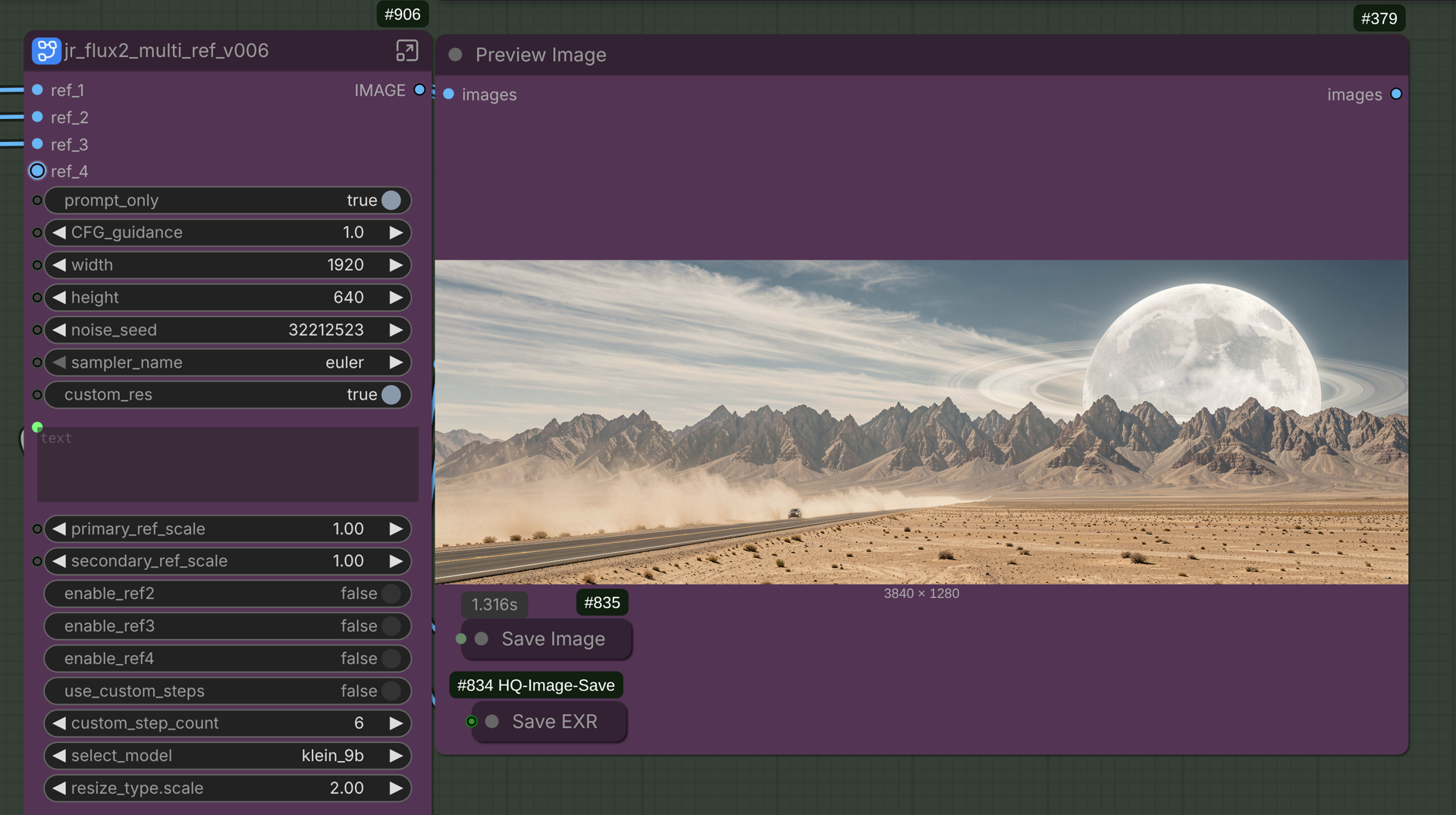
This necessity for foundational knowledge is glaringly obvious in my own field of visual effects. Anyone using ChatGPT, Grok, or Midjourney can generate a stunning image. But for high-end VFX, the problem always boils down to one thing: controllable results.
Professional visual effects require specific, granular control over an image and the ability to retain original pixels. Models inherently want to rebuild the full picture. We can lean on more complex, node-based tools like ComfyUI, or dial in a highly specific Flux2 setup that completely bypasses ControlNet, to push for specificity. Yet, the underlying mechanism remains the same: a heavily trained model inventing new pixels.
For over two decades in the visual effects industry, I have seen tools evolve, but the core requirement remains. To generate usable AI imagery for production, artists must understand the delicate house of cards driving diffusion models—quantization, VAEs, CLIP models, and checkpoints. AI is ultimately just another addition to our ever-growing list of paid software.
Antigravity Experiment and "Vibe Coding"
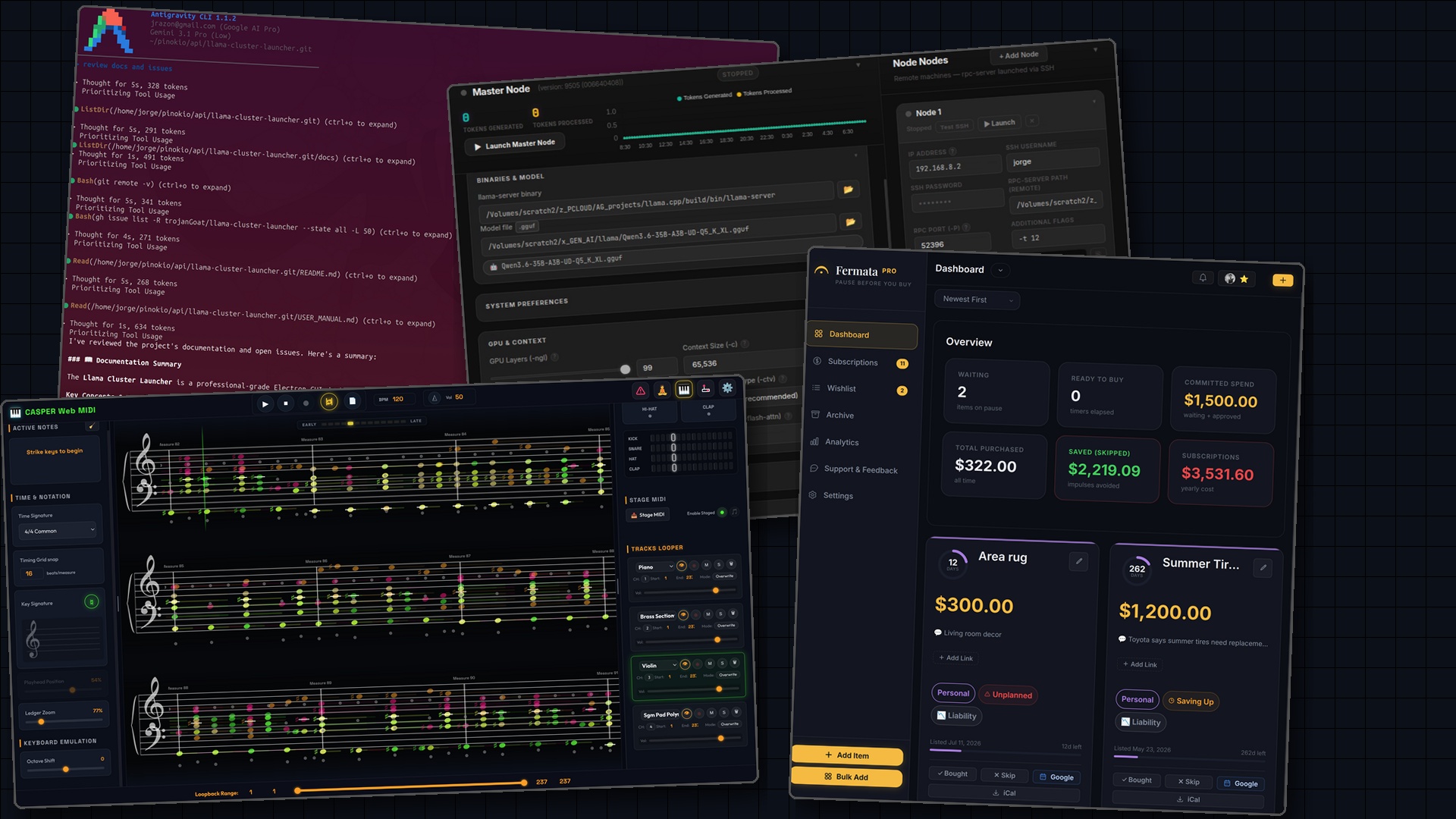
This need for deep, structural understanding isn't limited to visual effects; it is just as crucial in software development. To test the boundaries of my own knowledge, I decided to rebuild my webpage and develop a few custom tools using "vibe coding" with the Antigravity agentic IDE. The premise was simple: how far can a non-coder go by using natural language to direct AI agents?
As it turns out, quite far. I successfully built out applications ranging from a custom system monitor, to a web-based MIDI training app named CASPER, and a subscription-tracking app called Fermata. However, putting in the time to make an app usable revealed a harsh truth. Even with the immense power of agentic tools, you still need to guide the AI to structure the software so it is maintainable.
You must have a "credo"—a strict definition of what your software will do and, equally important, what it will not do.
AI tools will never call you stupid. They will do exactly what you ask for. If you request things that do not make sense, you will get exactly that: software that makes absolutely no sense. Applying critical thinking and actual software engineering principles makes a world of difference.
So, is the software I made any good? It is more than good enough for what I need it to do. I have built these applications to be maintainable, secure, and ready for public release for free or for a very small fee. However, I would be highly hesitant to deploy them as part of a larger entity. If I were to deploy these tools within a massive organization, I would triple-check my steps and bring an experienced software engineer on board for the implementation.
This realization highlights a broader necessity: the responsible use of generative AI. The obvious ethical boundaries are clear: avoid generating illegal content or destructive software like malware. As a civilized society, one would hope that most people do not aim to build these things. But the less obvious ethical lapse is blindly making software and deploying it with little to no testing.
There is a reason software has version histories; most initial releases are riddled with bugs and must evolve over time. Going through this vibe coding experiment made one thing glaringly clear: Applications are like pets or an old house—they need constant attention and maintenance.
It would be nearly impossible for one software developer to maintain twenty-five complex applications. Even with the help of AI, dealing with the endless stream of bugs, user requests, and rigorous testing is simply too much work for a single individual.
History Repeating Itself
Will AI take jobs from artists or developers? Not really. Because of the demand for specificity and critical thinking, human operators are still essential. A director or VFX supervisor cannot simply sit in front of a monitor, say "make my movie look cool," and expect magic to pour out.
The people left behind will likely be those who refuse to evolve alongside these tools. This is simply history repeating itself. As technologies shift, certain roles go extinct, while highly specialized skills continue to thrive.
There will certainly be a culling and consolidating of roles as tools continue to make our lives easier. Under the right control, generative AI tools can raise the bar for the quality of work produced by artists, speed up production, and keep costs low for clients. Isn’t that the dream?
There is still room for specialists, and there likely will always be room for such individuals. Consider a standard set of dishes: you might pay $50 for a manufactured set because the production cost is low. Yet, people will easily pay $1,000 for a beautifully handcrafted, artisanal dish. If an artist or developer chooses not to adapt to AI workflows, their traditional skills better be so exceptional that a production or company would willingly bypass the efficiency of AI to pay for their human craftsmanship.
In the world of VFX, for the next little while, there will be projects and studios that are open to generative AI use while others are not. This is no different from a director choosing to shoot film on IMAX vs. digital vs. an iPhone. Although the more expensive route that requires high skill will likely taper off, the prestige remains. How many movies are actually shot in IMAX? How many VFX movies have the immense budget and craftsmanship poured into Avatar?
Mining for Gold in a Sea of Bloat
As a longtime teacher who has taught at Centennial College for a decade, and as a recruiter, I absolutely look for AI skills in new talent. But I am not looking for operators; I am looking for individuals with a genuine drive for growth who showcase critical thinking in their problem-solving.
I see the future of software improving substantially, especially in the open-source community. However, I also see the internet filling up with an unprecedented amount of bloat. We are already seeing Google Images flooded with synthetic media. Finding a raw, unedited, high-quality photograph crafted by a human feels like mining for gold. The internet is rapidly filling with noise, making the signal—true, considered, and critically structured human effort—more valuable than ever.
Thanks for reading,
-jorge